Where The Timber Yard Once Stood
The line of vehicles waiting to enter Laos barely moves. Ahead of us, a handful of immigration officials sit beneath large umbrellas, sheltering from the scorching afternoon sun. The formalities are surprisingly efficient. A visa is issued within minutes. An extra twenty American dollars saves half an hour standing in the heat. The transaction is carried out without the slightest embarrassment, as though everyone involved has done it a thousand times before.
Our driver is well known at the border. He exchanges greetings with the customs officers before opening the boot of the car for inspection. There is laughter, more conversation and then the inevitable request.
‘He wants one thousand baht for each bag.’
My wife smiles, hands the driver two hundred baht and tells him to offer that instead. The customs officer slips the notes into his pocket and waves us through. It is hardly an auspicious introduction to the country, but neither is it especially surprising. Every nation has its own way of keeping its bureaucracy moving. In Laos it simply happens a little more openly than elsewhere.
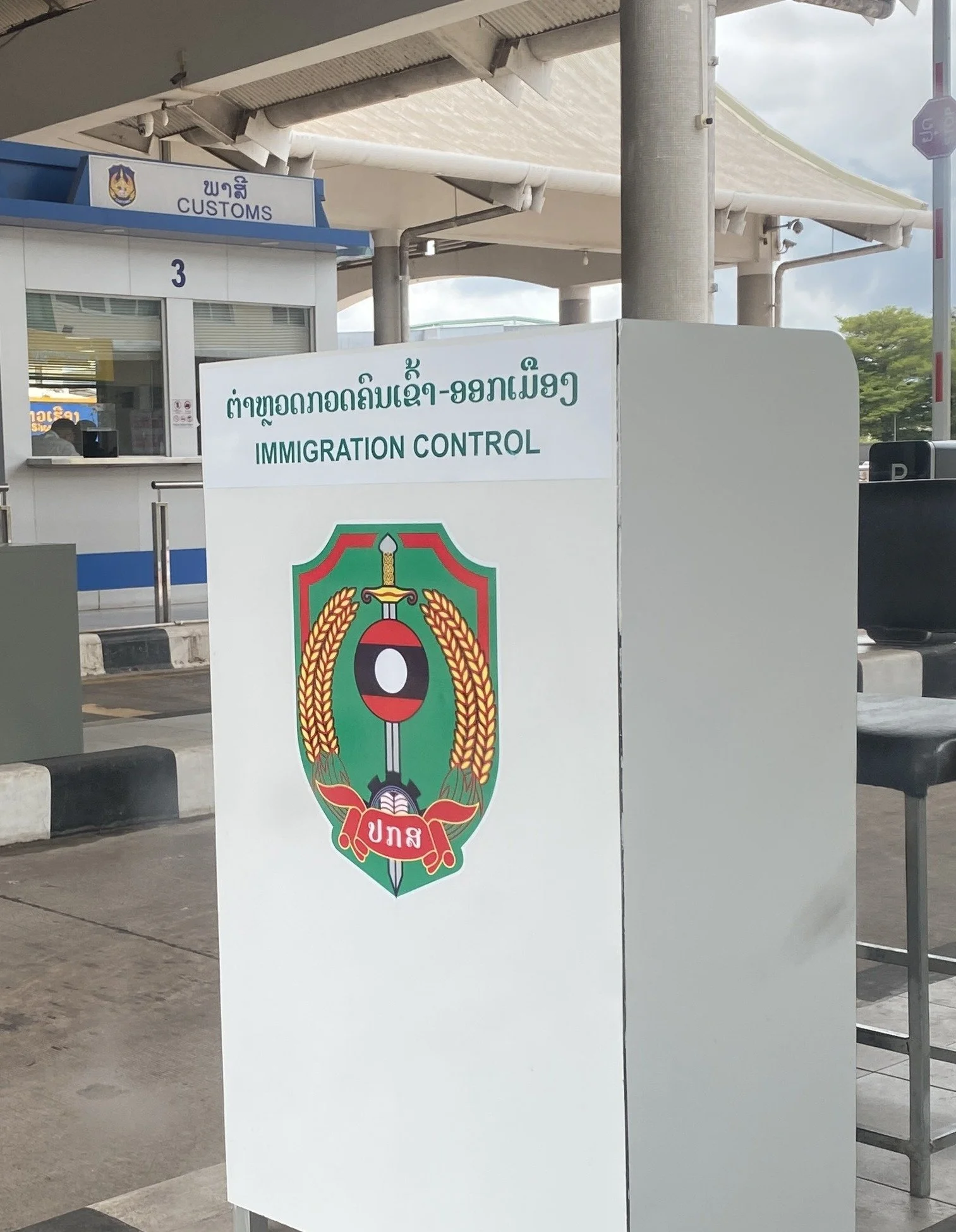
We cross the Friendship Bridge and continue towards Vientiane. The road is dusty and broken in places, flanked by modest houses, roadside stalls and the occasional ambitious new building. Construction continues all the way into the city. It is early evening by the time we reach the small apartment we have rented on the banks of the Mekong River.
The riverside remains one of Vientiane's great attractions. Restaurants spill onto the footpaths, families stroll along the promenade, and the night market stretches beside the river as it has for many years. It is the middle of the wet season, and the vendors spend almost as much time protecting their goods from sudden downpours as they do selling them. Plastic sheets flap in the wind before another shower sweeps across the river from Thailand.
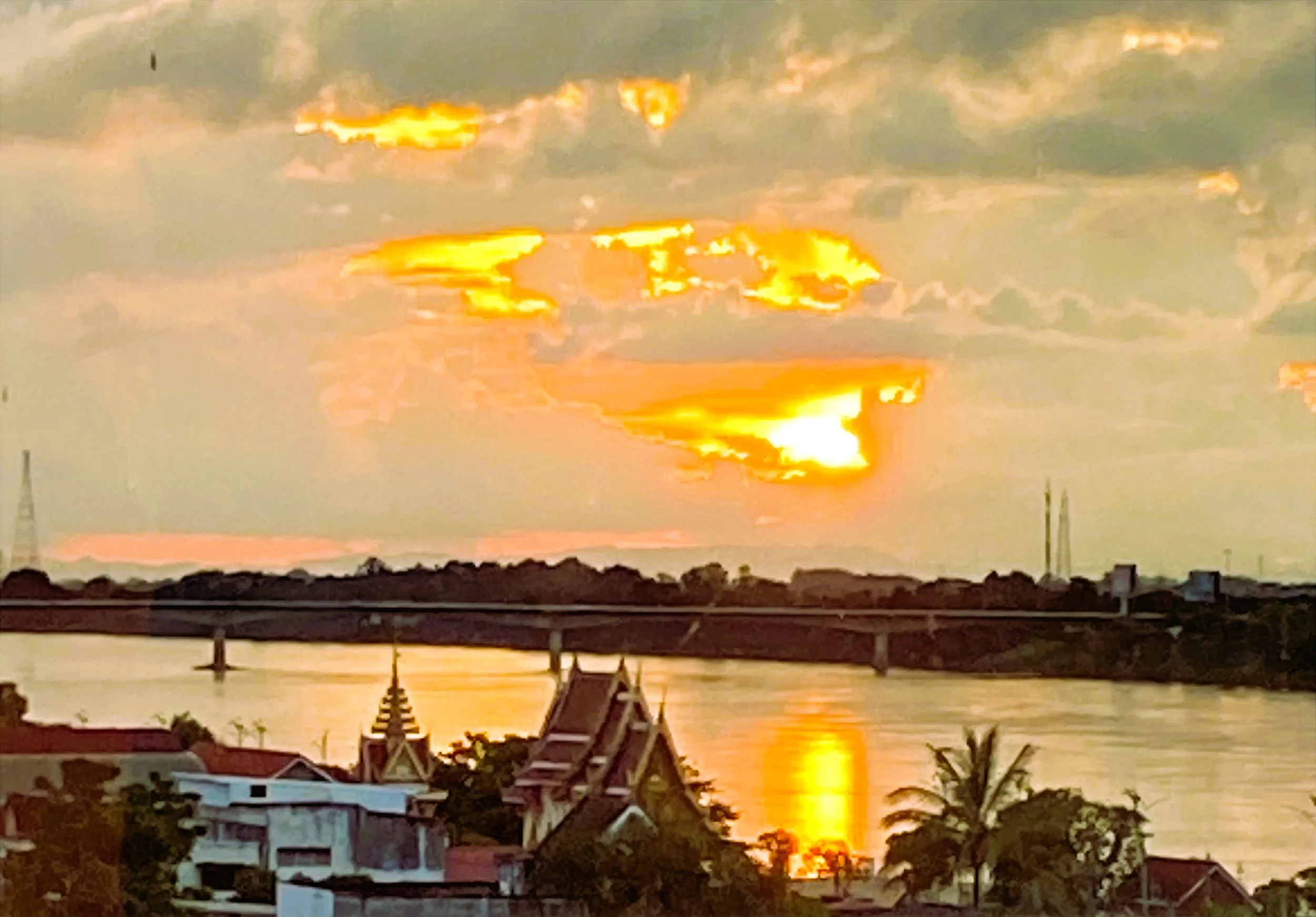
Much has changed since my last visit more than a decade ago. A large international hotel now stands where backpacker guesthouses once stood. Prime riverside land has become too valuable for small guesthouses.
This visit feels different from previous journeys. Over the years I had travelled to Laos regularly for work, but business trips rarely allow enough time to understand a place. This time we had no schedule beyond our own curiosity.
What struck me most was how young the country felt. Compared with neighbouring Thailand, where we had spent the previous month, there seemed to be children and young adults everywhere. Schools emptied into crowded streets during the afternoon, and cafés filled with university students in the evenings.
For my wife, however, this was not simply another overseas journey. She had spent part of her childhood here before her family left in 1975 as the communist takeover reshaped the country. Like many families, they left everything behind and began again elsewhere.
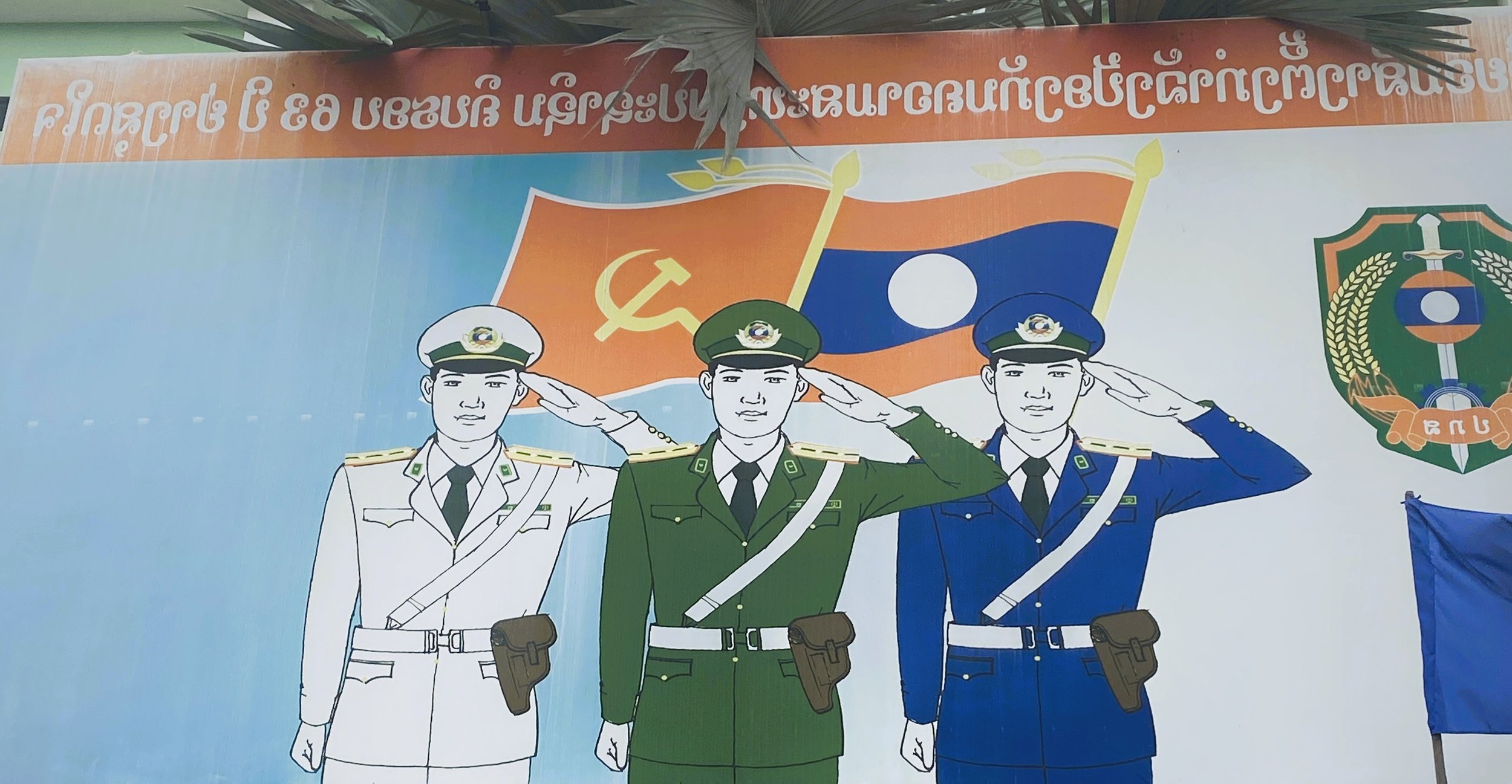
Our timing was deliberate. We had chosen to visit in September, only a few months before the fiftieth anniversary of the establishment of the Lao People’s Democratic Republic on 2 December 1975. We wanted to see how the country would mark the occasion.
One morning we met an old friend for coffee. He was a lifelong civil servant who had spent his career working within the Lao government. Our conversation turned to the approaching anniversary.
‘Will there be major celebrations?’ I asked.
He smiled before answering.
‘Not really. The economy is struggling. It would be difficult to justify spending large amounts of money on celebrations while asking people to accept cuts to government spending.’
‘So, what will happen?’
He glanced around the café before replying.
‘There will be a military parade, supported by Vietnam, fireworks and plenty of flags. That will be enough.’
We left with the impression that he had told us only part of what he really thought. In Laos, political opinions are still expressed carefully, particularly in public.
Later that afternoon we walked through a neighbourhood close to Wat Khounta. Without warning my wife stopped.
‘My father's timber yard was right there.’
She pointed across a busy four lane road leading from the airport to the city centre. ‘We used to run across this road when we were children.’
It was difficult to imagine. The road she remembered no longer existed and neither did the timber yard or the family home. The entire site had long since been cleared. In their place stood the Vientiane Pattana International School, occupying the land where her childhood had unfolded.
There was nothing left except the location itself. No front gate. No timber yard. No house. Only memory connected the present with the past.
We walked back to our lodgings by the Mekong in silence.
For us, the fiftieth anniversary of the Lao People’s Democratic Republic was never simply a political milestone. It marked the events that had brought my wife’s childhood in Laos to an abrupt end.
The following morning, we made our way to the new Vientiane railway station to catch the train north to Luang Prabang. The station could hardly be more different from the city around it. Vast, modern and almost clinical, it sits in an expanse of concrete. In less than two hours we reached Luang Prabang, a journey that once required most of a day by road.
The train is also a reminder that Laos is changing in ways that would have been unimaginable only a generation ago. Chinese investment is visible throughout the country, from the railway itself to apartment buildings and commercial developments.
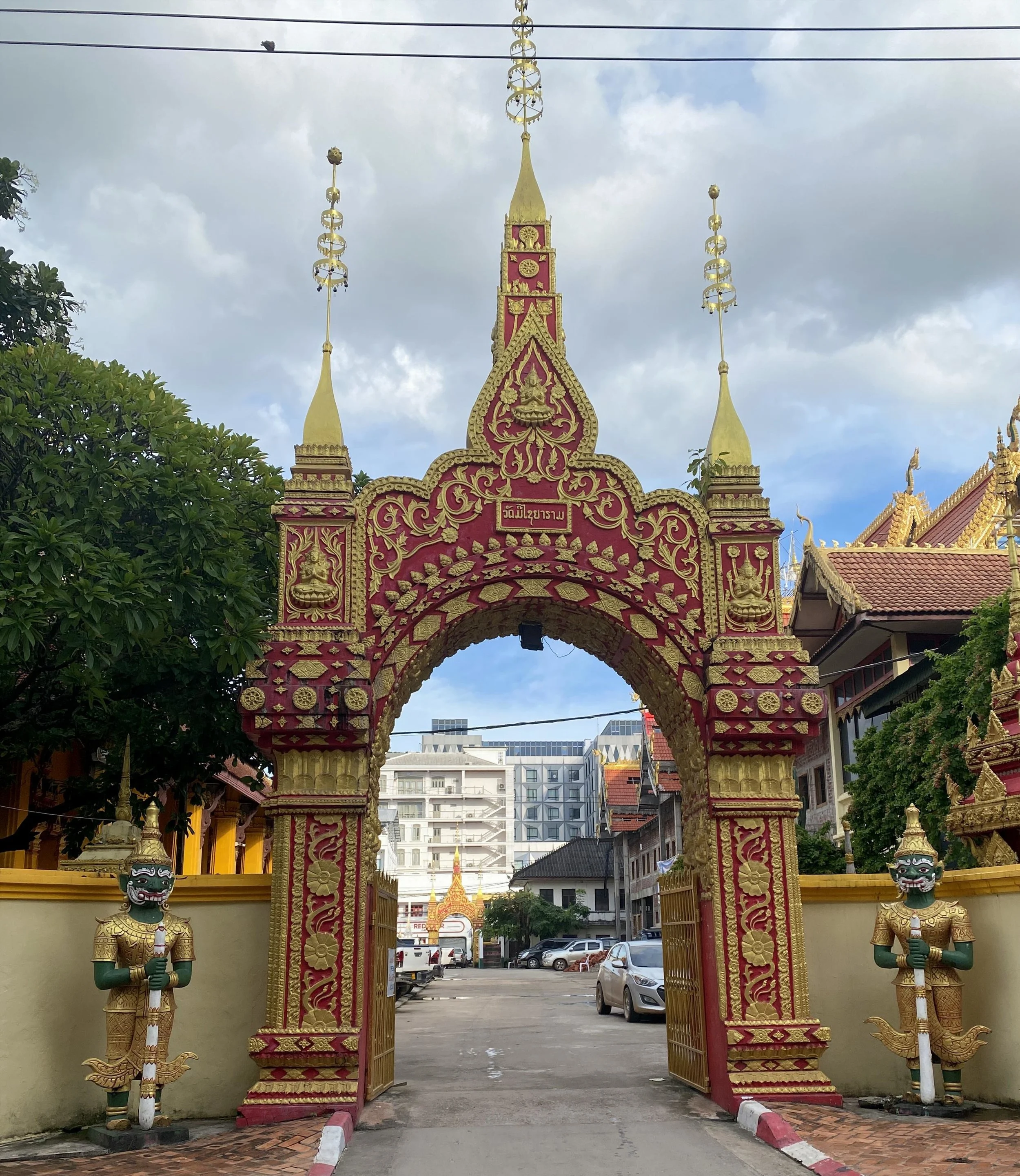
Luang Prabang feels very different from Vientiane. Although tourism has transformed much of the old town, it still retains a gentleness that has disappeared from many other cities in the region. The temples, French villas and narrow streets remain, and by early evening people gather along the Mekong as they always have. It is easy to understand why UNESCO chose to protect it.
Laos is often judged against its neighbours in terms of economic growth or living standards. Those comparisons have their place, but after more than thirty years travelling here, what stays with me has very little to do with statistics.
What has remained constant throughout every visit I have made over the past three decades is the character of the Lao people. There is a quiet civility in everyday encounters and a gentle sense of humour that surfaces unexpectedly in conversation. It doesn’t appear in government reports, but it’s the quality I remember most.
As our aircraft climbed away from Luang Prabang a few days later, heading back to Bangkok, I found myself thinking less about politics than about memory.
What I’ll remember most is watching my wife stop beside an ordinary stretch of road and quietly point across the traffic.
‘Dad’s timber yard was over there.’
Nothing remained except the location. Yet for her, that was enough.
It remains a place we love. We will return.