What I Learned About Cambodia From a Tuk Tuk Driver
Nearly thirty years later, there are only two things I remember clearly about that day in Phnom Penh. One was a room at Tuol Sleng. The other was something the tuk-tuk driver said to me on the journey back to my hotel.
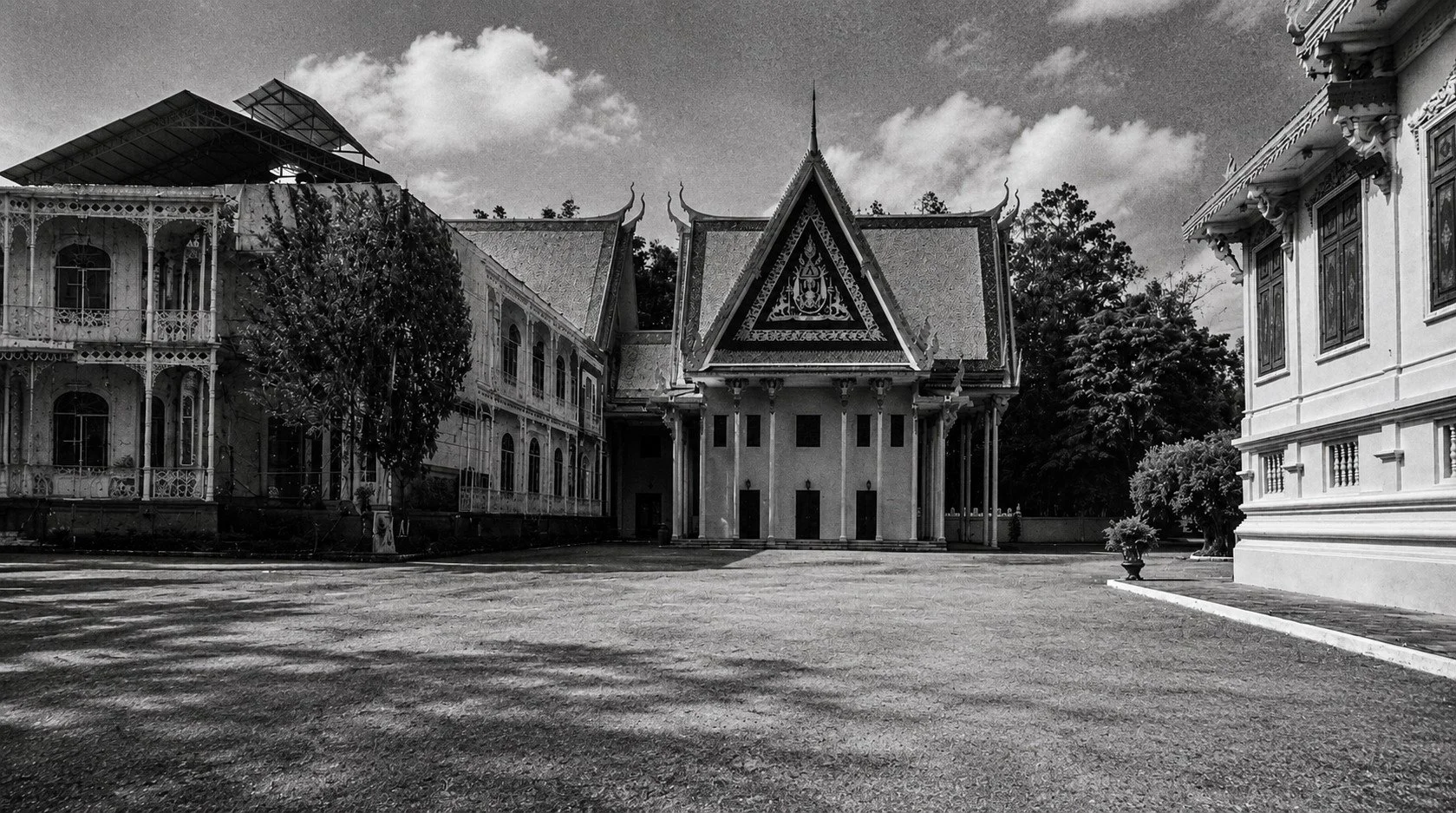
When I first visited Phnom Penh in the mid-nineties, it had a rough edge. The streets were full of potholes and dust clung to everything. The cafes and bars were busy, and the markets seemed to spill into every second street. But poverty was impossible to ignore, with beggars occupying most street corners.
I'd been woken early by the sounds of Phnom Penh coming to life. Vendors were setting up their stalls, delivery trucks rattled through the streets and any thoughts of more sleep were abandoned. Sitting in a small café near the Tonle Sap River with my first coffee of the day, I found myself thinking about Cambodia's recent history. Anyone over the age of forty would have been an adult when the Khmer Rouge seized power in 1975. How many ordinary people I passed in the street had lived through those years? How many had been part of the regime? More importantly, who would ever admit it?
The staff at my guesthouse suggested I spend the morning at the Russian Market. Officially known as Toul Tom Poung Market, it had earned its nickname during the 1980s when Soviet and Eastern European expatriates shopped there for imported goods. A tuk-tuk driver named Dara agreed to take me there, wait while I wandered around and drive me back for a couple of dollars. It seemed like a fair deal, although I had no idea the day would take an unexpected turn.
The market was exactly what I expected. Hot, noisy, and crowded. Having already lived in Thailand for several years, I thought I knew Southeast Asian markets well enough. I was only partly right. After an hour in the heat, I was ready to leave.
As I climbed back into the tuk-tuk, Dara asked whether I wanted to visit the museum. Assuming he meant the National Museum, I agreed. Twenty minutes later we stopped outside what looked, at first glance, like an ordinary secondary school. Only the sign above the entrance hinted at its terrible past. Toul Sleng Genocide Museum.
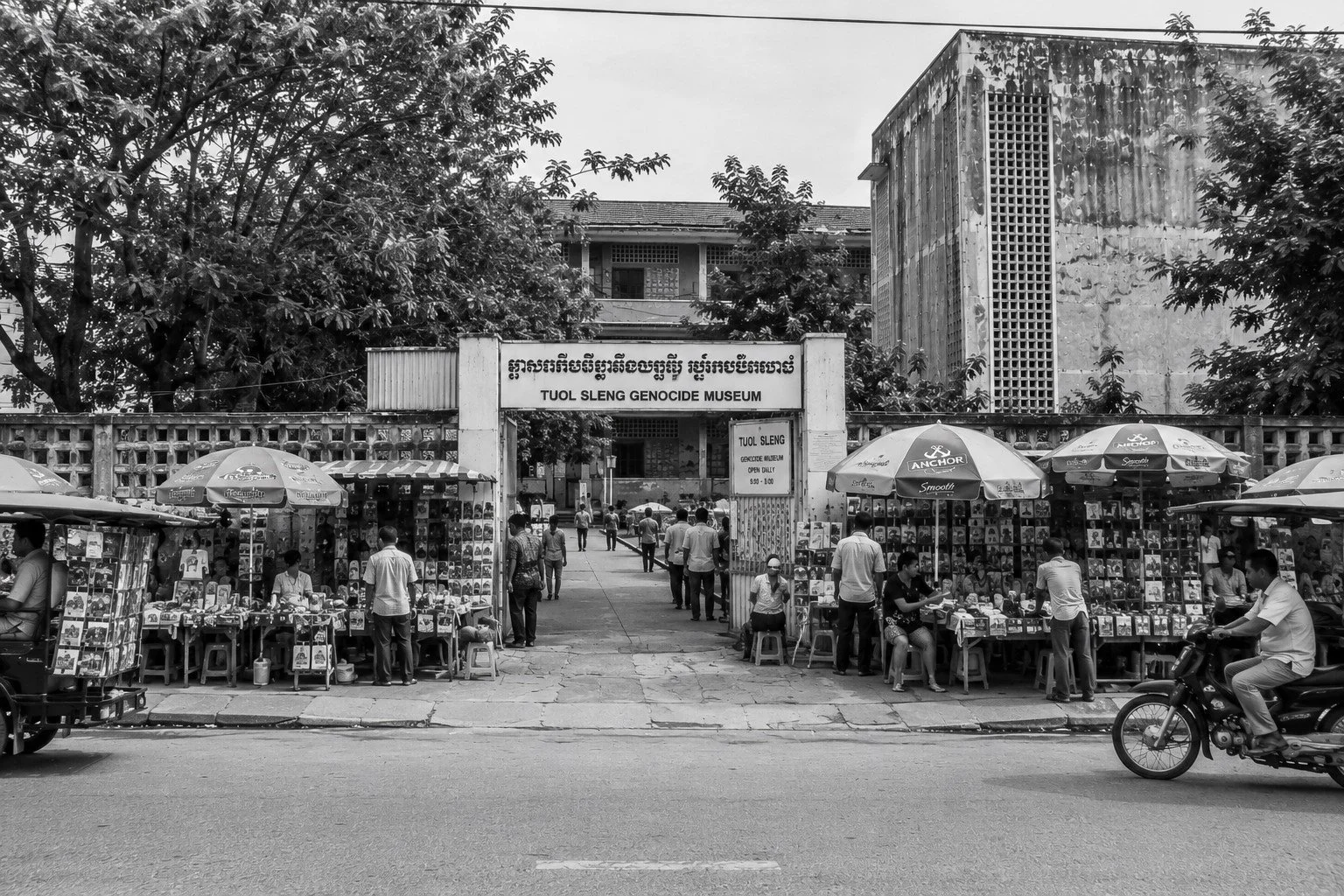
The history of Tuol Sleng is well documented. Rather than repeat it here, I’ll simply describe what stayed with me. Suffice to say that around eighteen thousand prisoners entered the compound. Only twelve made it out alive. What struck me most was how ordinary the buildings looked. Classrooms had become prison cells. Corridors where children once ran had become places of torture.
Despite the oppressive heat outside, inside, the place was cool. And eerily quiet. Expressions of fear and terror were etched on the faces of those who died here. Portraits of them lined the walls. The Khmer Rouge kept meticulous records of their work here.
I stood staring through the doorway of a largely empty room. At first glance, it was just a bare room with an iron bed. Then my eyes settled on the shackles attached to the bed frame and the rows of photographs on the walls, and I began to understand the extent of what had happened here. The floor tiles were still stained dark brown. More than twenty years had passed, but the marks remained. I couldn’t stay any longer, so I headed for the exit, needing fresh air more than anything else.
As I neared the exit I was stuck behind a delegation of senior United Nations officials, visiting Cambodia during the country’s fragile post-conflict reconstruction. Surrounded by television cameras and security personnel, it was impossible to get past them. As the group emerged from the museum, a cluster of vendors approached them waving postcards, keyrings with plastic skulls attached and T-shirts bearing photographs of torture victims.
The leader of the U.N delegation suddenly stopped and rounded on the vendors, angrily rebuking them. He demanded to know how anyone could sell such things outside a place like this. Finally, the security detail escorted the delegation towards their waiting vehicles while the vendors quietly drifted away.
Back in the tuk-tuk I asked Dara what he thought about what had happened. He simply shrugged. ‘People are just trying to make a living,’ he said. ‘We are tired of explaining ourselves to the outside world.’ There was no anger in his voice. Just resignation.
During the drive we chatted in English. There was something unusual about his English that I couldn't quite place. He’d learnt French as a boy and his English carried the same accent. He told me about his family and, over the course of the day, became much more than a driver. The traffic was heavy, and the constant chorus of car horns filled the streets around us, but Dara remained calm and patient.
As the afternoon wore on, he told me more about himself. As a boy, he dreamed of becoming an engineer. It never happened. His father had been killed. So had his brothers, uncles and cousins. By the time the fighting was over, he was the only surviving male in his family. Supporting his widowed mother and sister became his responsibility. Later there was a wife and children of his own to take care of. Driving a tuk-tuk wasn’t what he’d planned to do with his life.
Our conversation turned to the Khmer Rouge years. Carefully, I asked what had it was like during the Khmer Rouge regime. He was quiet for a moment before answering. 'We all did what we had to do. If you refused, you died. When it was over, people took off their uniforms, put on ordinary clothes and tried to get on with their lives.' Whether he was speaking about himself, his family or Cambodia in general, I never knew.
Until then, all that I knew of Cambodia came from books and documentaries. It was classic history, governments and ideologies. But for most Khmers, it was simply about survival. By the end of the day, it had a face and a name.
I can still picture the room at Tuol Sleng. More than anything, though, I remember a tuk-tuk driver quietly saying, “People are just trying to make a living.”