The Practical Monk
‘Never forget where your opportunity came from. Our lives are blessed by the kindness of others.’
Arrival at the Temple
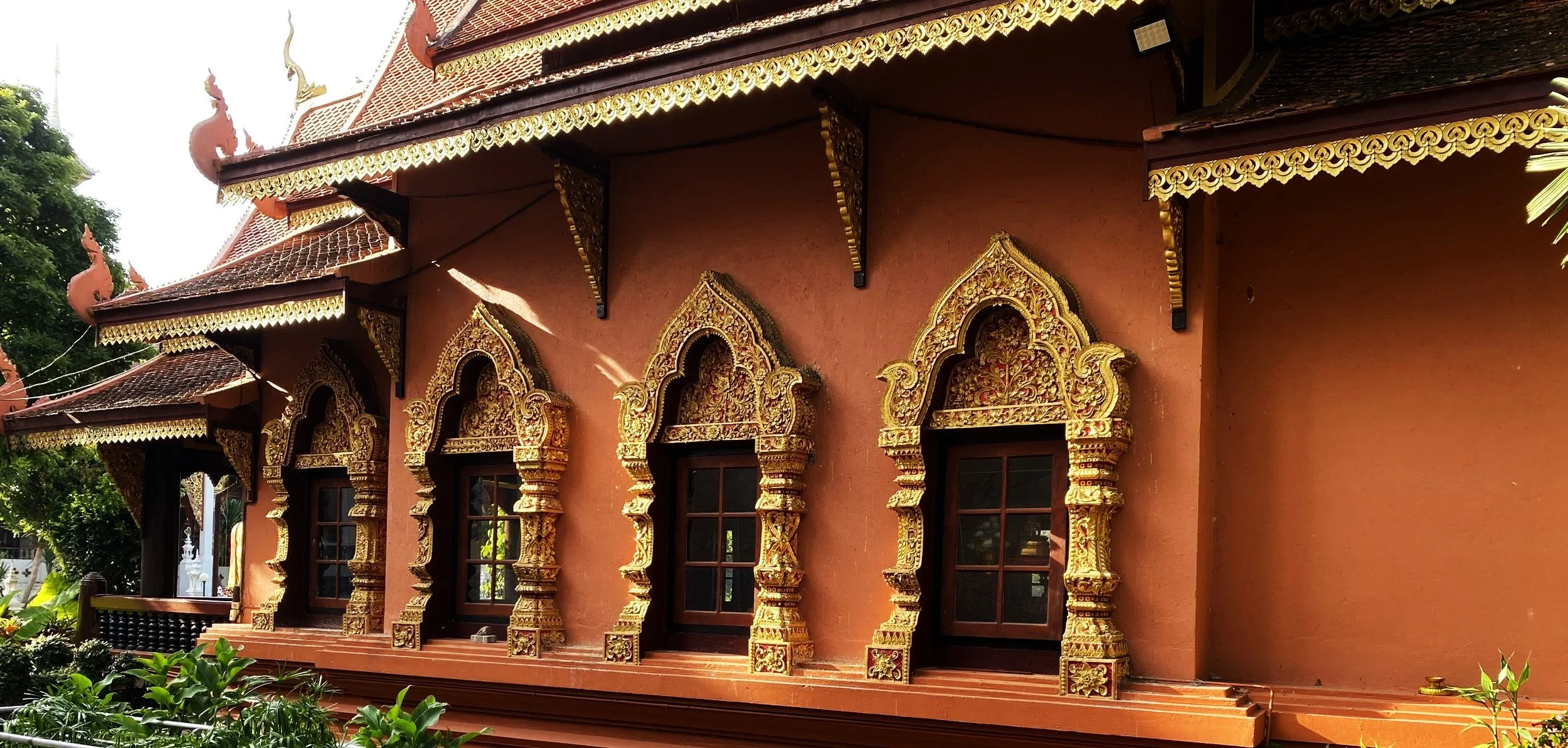
Threading our way through the leafy mountains, three hours north of Chiang Mai, we arrive at our destination. Lychee trees, laden with fruit, line the driveway into the vast temple grounds. I pass the meeting hall and a small workshop bustling with volunteers. At the far end is a school for the novice monks, various prayer rooms, a library, and a museum, nestled amongst carefully tended gardens, abundant with fruit and flowers. The housekeeper meets me with a smile and advises that the abbot is busy and will join me shortly. Children’s laughter drifts from the novice school as I wander the grounds, an echo of the first time I arrived here almost thirty years ago.
More than a Place of Worship
Buddhism has become a global emblem of tranquility for many in the West. Incense curling in yoga studios, images of gold-tipped temples and monks depicted as serene figures far removed from everyday concerns. Yet, in rural Thailand, the temple is not only a place of worship but also the school, welfare office, community hall, and the clinic. Monks are not distant mystics, but community leaders, mediating arguments, tending to the sick, and working on the land when needed. What they do goes beyond simple gatherings in meditation halls.
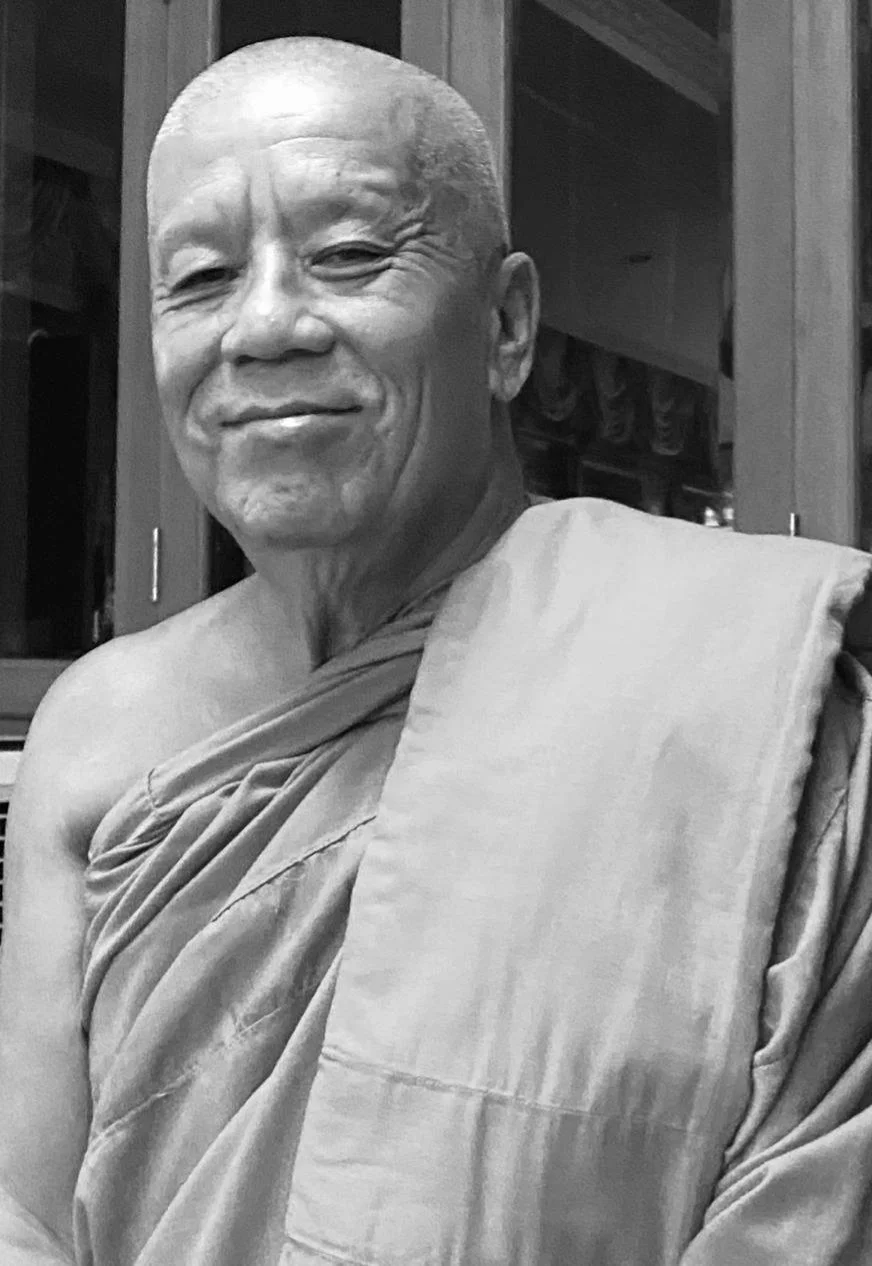
The leader of this monastery is one such monk, practising these roles daily in a life dedicated to service. The abbot, small in stature, approaches me, smiling broadly and clasping my arm with both hands. I’m staying a week in this forest monastery, to learn more about his life and community. Many years ago, I spent time here recovering from a difficult chapter in my life when he guided me with a wisdom that left a lasting impression. He is sincere, authentic, and a gifted storyteller. His interactions with his followers, fellow monks and young novices are cheerful, collegiate, and gentle.
He adjusts his robes and settles quietly into his favourite chair, having agreed to share his thoughts and experiences on almost sixty years of monastic life. His calm demeanour is infectious, and I unconsciously slow my rhythm to match his.
From Poverty to Purpose
Luang Por (หลวงปู่), is a revered Thai Buddhist title meaning "Venerable Grandfather," reserved for highly respected, elderly monks. Born into hardship, he recalls a childhood where his father earned ten baht a day (less than a dollar) and his mother earned even less. It was barely enough to feed the family. To help stretch meals, he and his brother spent afternoons after school wading through the rice paddies catching fish and crabs.
‘I was used to hunger long before I became a monk,’ he said calmly. ‘It was my companion for years, but I stopped noticing it a long time ago.’
Solitude came naturally to him, and so did the attraction of the temple. At age 12, he entered the monastery as a novice monk.
‘I thought the temple life was good,’ he explained. ‘There was a chance to get an education, there was guidance, and there was fellowship.’ At twenty, he had taken full ordination as a monk, And over the decades since, he built a life of service. His teacher, a revered spiritual leader, believed that the spirit of Buddhism was best expressed through service. ‘To be good,’ Luang Por remembered him saying, ‘may not be enough. We must also be useful.’
Putting Compassion to Work
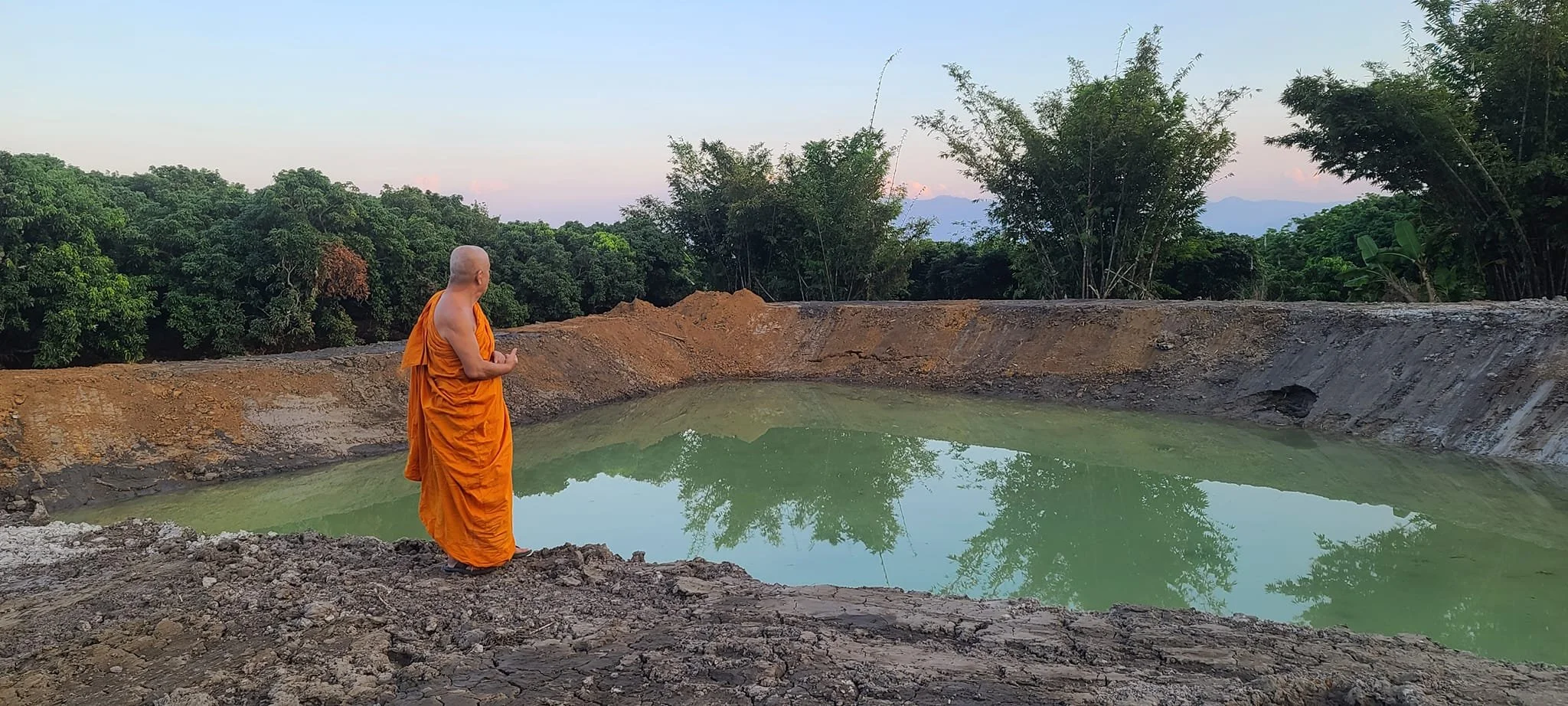
In the mountains around his temple, shifting cultivation led to deforestation. Hillsides slumped after heavy rain, streams ran brown with silt, and wells ran dry before the cool season ended. As the farmers grew desperate, the words of his teacher came back to him. He responded by gathering volunteers to build small check dams (weirs) that slowed runoff and restored groundwater.
‘Some people laughed, saying one monk and a few villagers couldn’t change anything,’ he recalled. ‘But if everyone in the community gave just one day, the forest would recover soon enough.’
I hear the vehicle idling in the courtyard, just as he rises and heads for the door, beckoning for me to follow. ‘There’s something I want to show you.’
Busaba, the temple housekeeper, is already behind the wheel, offering a running commentary on the short journey. We sweep past papaya orchards on the right, cash-crop vegetables on the left, with simple cottages scattered between them. It is the middle of the wet season, the verdant landscape is almost technicolour green.
We lurch in and out of the ruts as our road grows steeper, clouds are enveloping the hills around us as another storm forms on the horizon. We’ve left it late in the afternoon to visit the site of the holding ponds, but Luang Por is keen for me to see it while we still can. One more heavy downpour is likely to make the road impassable for weeks.
Finally, we come to a halt at the ponds he’d wanted me to see. The air is cold at this elevation and mist drifts through the trees The ponds shimmer with runoff captured from the storms, providing a lifeline for the forest below. His eyes scan the waterline with the quiet pride of someone tending a long-growing hope, the conviction of someone who believes that usefulness is a kind of prayer.
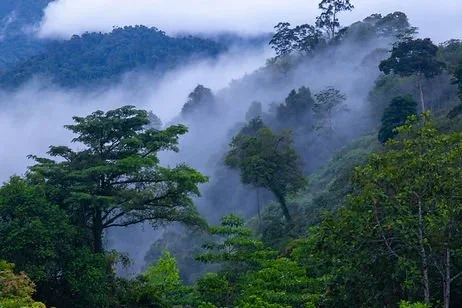
Returning to the temple, with rain pelting our pick-up truck, he continued his story of the forest project. The volunteer effort grew. Schools sent students each Mother’s Day to plant trees on degraded slopes, returning on the King’s birthday to tend them. Local businesses donated funds and materials, and government forestry officers lent expertise. Over time, the initiative spread across neighbouring provinces, creating a movement of “water for the forest” conservation. His methods echoed the royal initiatives of King Bhumibol, but it was the monk’s moral authority that kept the villagers and officials cooperating long after outside attention faded.
The Temple and the Village
As the forest revived, his attention turned to another issue, common across the country. Rural families were being steadily pulled apart as younger generations left for Bangkok, Chiang Mai, and the industrial corridors where factories, construction, and service jobs promised wages that farming could no longer match. What often began as short-term work became permanent migration, and many parents, once supported by large households, were now growing old in near-empty villages.
‘My son and his family come home when they can, but it’s not often enough,’ says Siriporn, an eighty year-old volunteer working in the small workshop for local elders. She pauses over a half-finished candle holder, peeling clay from her hands. These modest little clay disks are sold to worshippers for merit-making ceremonies, the proceeds shared among the volunteers, helping to supplement their meagre incomes.
The abbot’s same spirit of service led to the founding of a small community hospice and aged-care home. One major donor came forward but insisted that villagers contribute labour and resources as well. Luang Por agreed, ‘They should feel this is their project.’
Equally important has been Luang Por’s role as a stabilising force in village life. When disputes erupt, over land, debts, or family quarrels, people bring their grievances to the temple. He calls this tradition ‘spiritual welfare.’
‘If a house burned down, monks would call the community together to rebuild it, or if a quarrel broke out, we would explain what was right and wrong. Because monks are respected, people are more inclined to accept our words.’
A Quiet Kind of Leadership
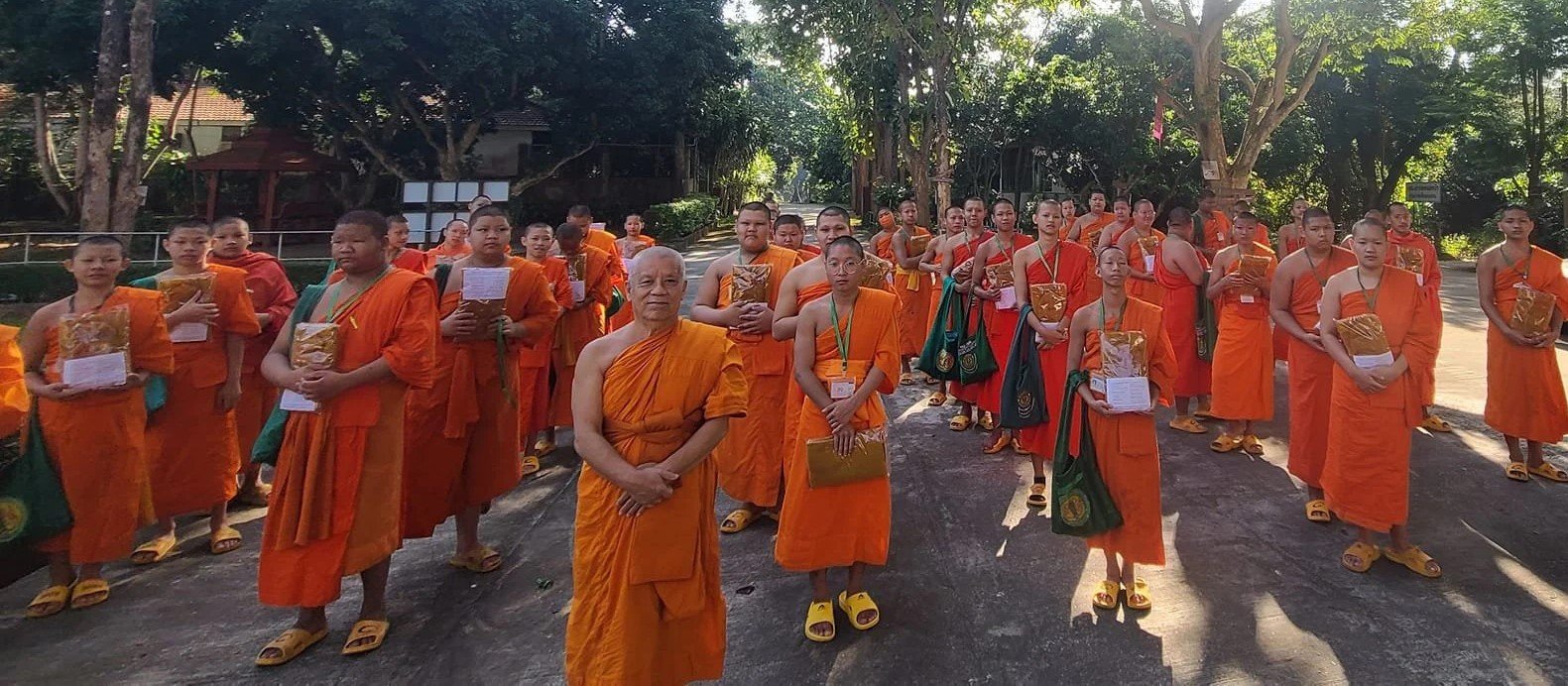
Mornings start early in the temple and as I wake to the rhythmic chanting of the monks before dawn, I find myself reflecting on my stay. Outside, rain drips from the eaves as last night’s storm finally exhausts itself. The previous day we had visited the temple school, where novice monks gathered in the courtyard, the younger boys kicking a football across the muddy ground. They greeted Luang Por with deep affection and respect, chatting and joking as he moved among them, seeming to know many by name.
As we stand at the assembly with the novices, Luang Por offers encouragement and kindness, ‘I know school can be difficult, but do the best you can.’
As the novice monks file into their classrooms, he looks around the courtyard and says quietly, ‘This was me sixty years ago. I never really left.’
Now in his seventies, the abbot no longer climbs mountains, but he continues to lead. Retired teachers, community groups like the Red Cross, and civil servants gather at his temple to take advice on their projects. He sees this as succession: passing knowledge to the next generation, instilling gratitude and responsibility in young people who live in a world of convenience but risk forgetting their roots.
‘The Bodhisattva path is to help others,’ he reflects. ‘We can’t do everything, but we do what we can, sincerely, and with compassion.’
This pastoral side of Buddhism rarely reaches Western audiences, yet it is here that the monk’s deepest contribution to society is revealed: practical, grounded, and essential to the survival of entire communities.
Luang Por’s story is far more than a boy escaping poverty. It is the story of how Buddhist monks act as practical leaders, supporting their communities, creating opportunities, and restoring dignity to the most vulnerable. The temple is more than a place of worship; it is the beating heart of the community.
At the week’s end I feel restored and uplifted as I prepare for my departure, grateful for the opportunity to see a community held together by service rather than self-interest. In a world crowded with noise, cynicism and distraction, there is something quietly radical about a place where compassion is practised rather than proclaimed.
‘Come back soon,’ Luang Por calls out. ‘I’ll take you to the forest again.’
As monsoon clouds gather once more over the hills, his steady presence reminds me of the countless monks whose quiet work continues to hold their communities together.