The Green Rush
How Thailand Opened the Door to Cannabis, Then Changed the Rules
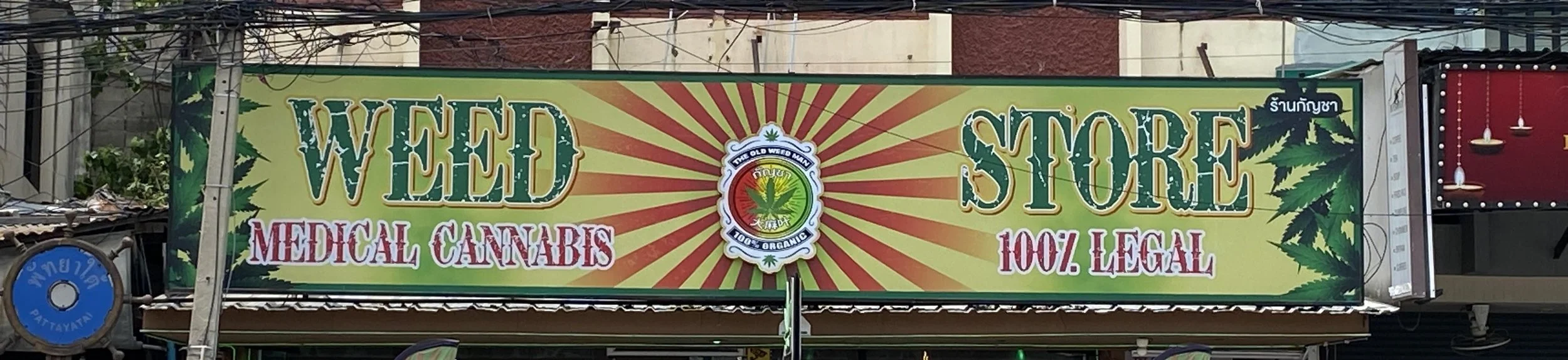
It’s late September 2026, and I’m wandering down a small laneway off Moon Muang Road in Chiang Mai. It’s somewhere I’ve been before.
In early 2023, I met a young man here. Let’s call him Tongchai. He had recently opened a small shop selling cannabis products, with an adjoining bar. Upstairs, his friend operated a tattoo parlour.
What originally attracted me to the place was the building itself. An old, two-storey teak house, perhaps seventy or eighty years old, built in a traditional northern Thai style. I’d stopped simply to take a photograph and asked Tongchai if he minded. He didn’t.
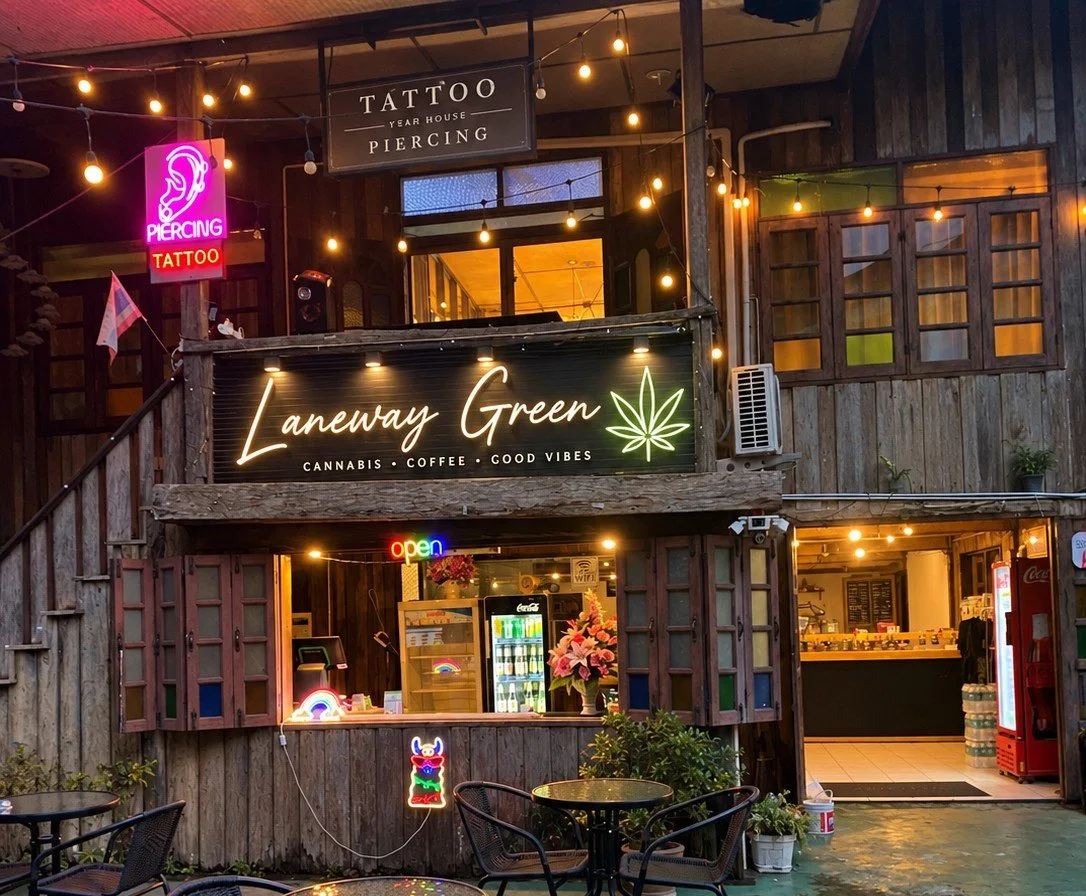
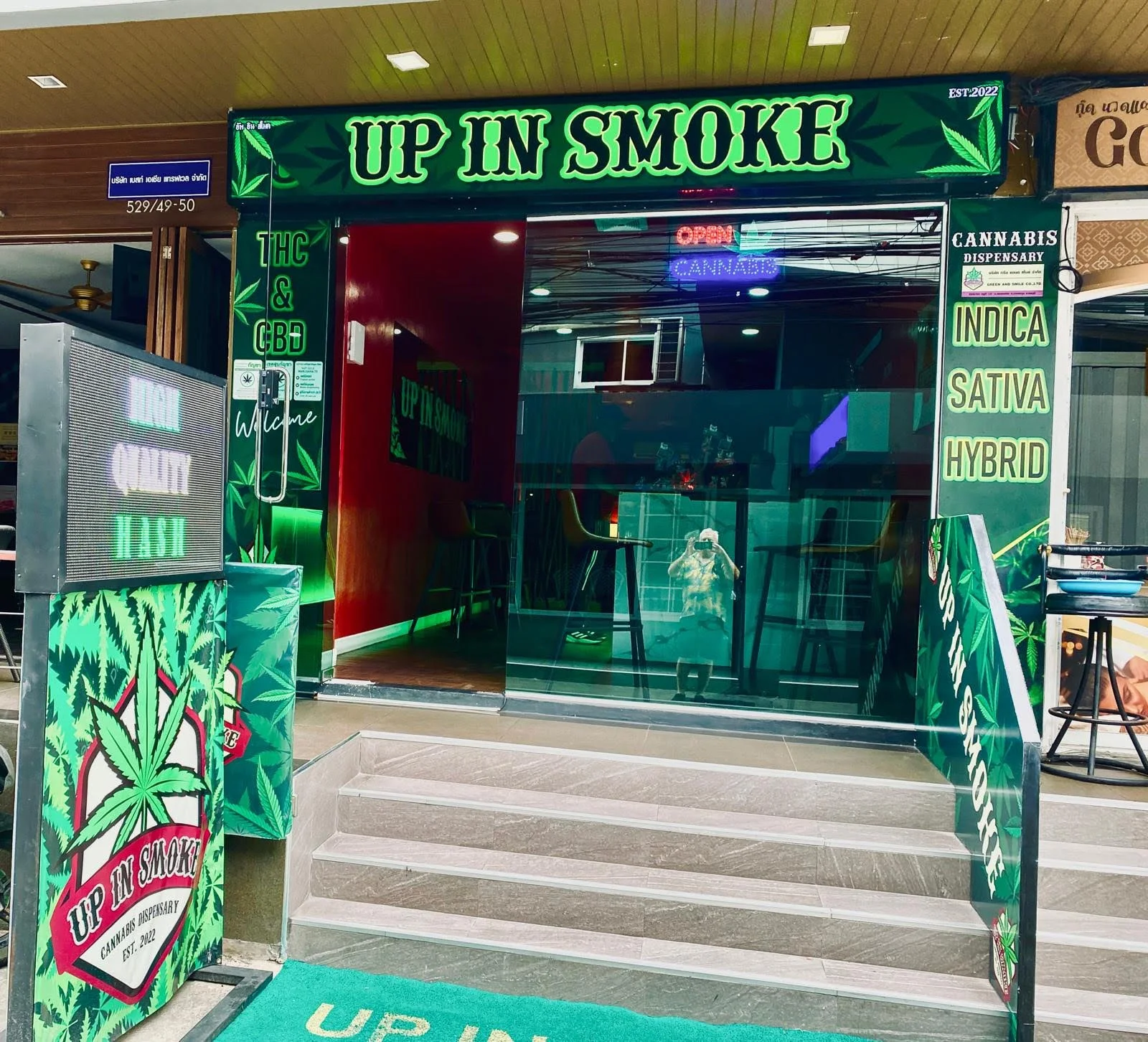
Tongchai had clearly spent some money on the place. The old timber house had been converted into an unlikely combination of cannabis dispensary, bar and tattoo parlour. Upstairs, a large TATTOO sign dominated the weathered wooden balcony, with a pink neon piercing sign beside it. Downstairs, the cannabis shop occupied a brightly lit room beneath an illuminated green cannabis leaf and a dispensary sign. Inside, a long display counter presented the merchandise in an orderly fashion. It had the appearance of a modern dispensary, although the surrounding neon lights and colourful signage suggested a different kind of place. It wasn't quite a pharmacy, nor was it the stereotypical reggae bar. It occupied a space somewhere between the two.
The bar opened onto a concrete courtyard furnished with black metal tables and chairs, with strings of warm lights suspended overhead. A small serving window, a drinks refrigerator and a collection of neon decorations completed the arrangement. Customers could buy their cannabis next door, then settle at a table with a drink and consume their purchases. Tongchai had leased the premises and invested a substantial sum fitting out both businesses, although the bar was initially secondary to the cannabis operation. It was an arrangement that made commercial sense. The shop attracted customers, while the bar gave them somewhere to stay. Tongchai explained how he had moved to Chiang Mai from a smaller town a few hours away, hoping to make something of Thailand's newly liberalised cannabis industry.
Tongchai had arrived in Chiang Mai with the expectation that cannabis would become a substantial new industry. He was hardly alone. Across Thailand, entrepreneurs were opening dispensaries, growers were investing in cultivation facilities and a whole new supply chain was taking shape. For a young man willing to take a commercial risk, the opportunity must have seemed considerable.
What Was in the Jars?
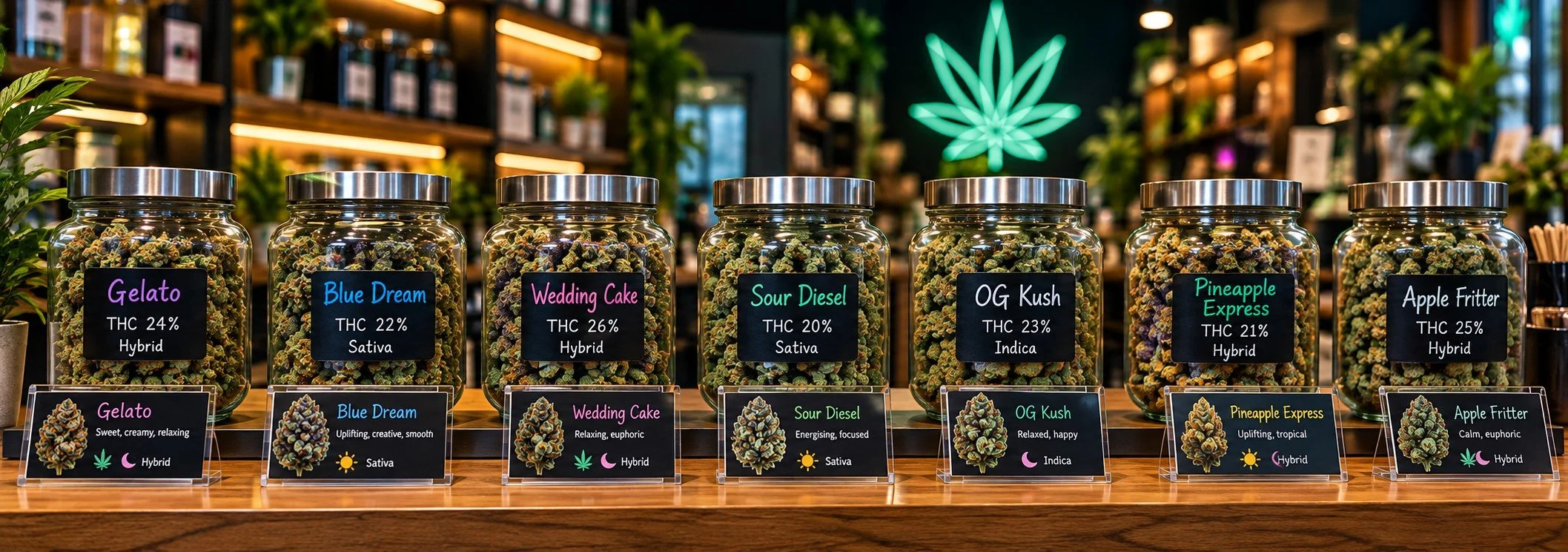
As we talked, I became increasingly interested in the cannabis itself. The jars on display carried names I had never heard of, along with percentages indicating their THC content, the principal psychoactive compound in cannabis. Some varieties were considerably stronger than others. The presentation was professional enough, but I wondered how much the people selling these products understood what was inside the jars.
Over the following months, during visits to other cannabis retailers, I began asking questions. How reliable were the stated THC concentrations? What constituted a reasonable dose for somebody unfamiliar with cannabis? How long would the effects last? And how long should someone wait before getting behind the wheel of a car?
The answers varied. Some retailers appeared knowledgeable, while others were decidedly less convincing. I was struck by the ease with which a customer could purchase a potent psychoactive substance without necessarily receiving much useful information about its effects. Thailand had opened the door to a new commercial industry, but the regulatory framework governing its operation was struggling to keep up.
How Thailand Opened the Door
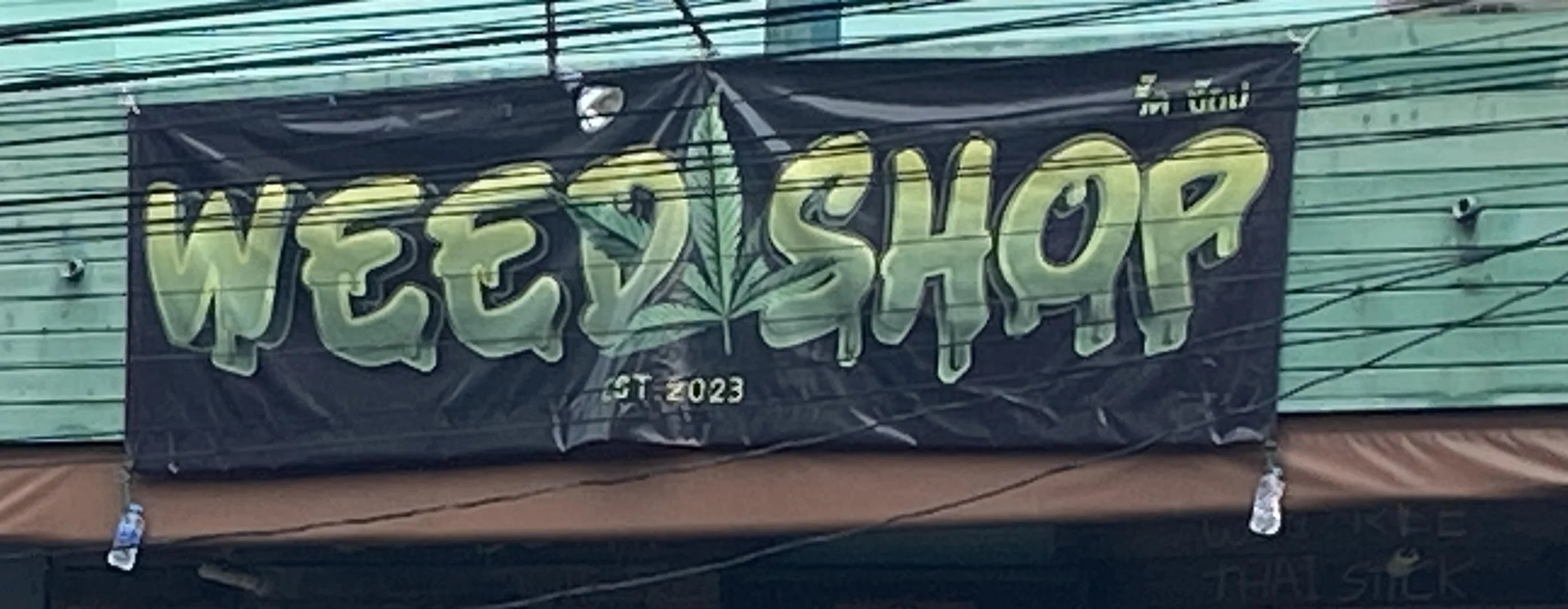
For decades, Thailand had maintained some of Southeast Asia's strictest drug laws. Yet in 2018, it became the first country in the region to legalise cannabis for medical purposes.
The Law That Had Not Arrived
On 9 June 2022, Thailand took the decisive step. Cannabis was removed from the Category 5 narcotics list, making Thailand the first nation in Asia to decriminalise the plant.
But there was a fundamental problem. The legislation intended to regulate the new industry had not yet passed Parliament.
The government had removed the principal criminal prohibition without first establishing a comprehensive framework governing cultivation, processing, distribution and retail sales.
The warning signs were visible almost immediately. Reuters reported on 18 June 2022 that a cannabis bill was still moving through Parliament while the government issued additional restrictions after decriminalisation had taken effect.
‘‘ There are no control measures other than word of mouth.’ Mana Nimitmongkol, head of the Anti-Corruption Organization (Thailand) | Reuters, 18 June 2022
The result was a commercial opportunity unlike anything Thailand had previously experienced. Entrepreneurs moved quickly. Cannabis shops appeared in tourist districts, growers expanded production and investors committed money to an industry whose long-term regulatory future remained uncertain.
By May 2024, researchers at the Thailand Development Research Institute (TDRI) were identifying loopholes across cultivation, processing and retail, together with fragmented enforcement responsibilities.
‘ Three years have passed, and cannabis remains in a regulatory vacuum.’ Kiratipong Naewmalee and Chanisara Dumkum | TDRI, 9 May 2024
Enter Khun Chuwit
Among those who took exception to the government's cannabis experiment was one of Thailand's more colourful public figures, Chuwit Kamolvisit.
A former massage parlour proprietor who had subsequently entered politics and reinvented himself as an anti-corruption campaigner, Chuwit was hardly an obvious candidate to lead a crusade against cannabis.
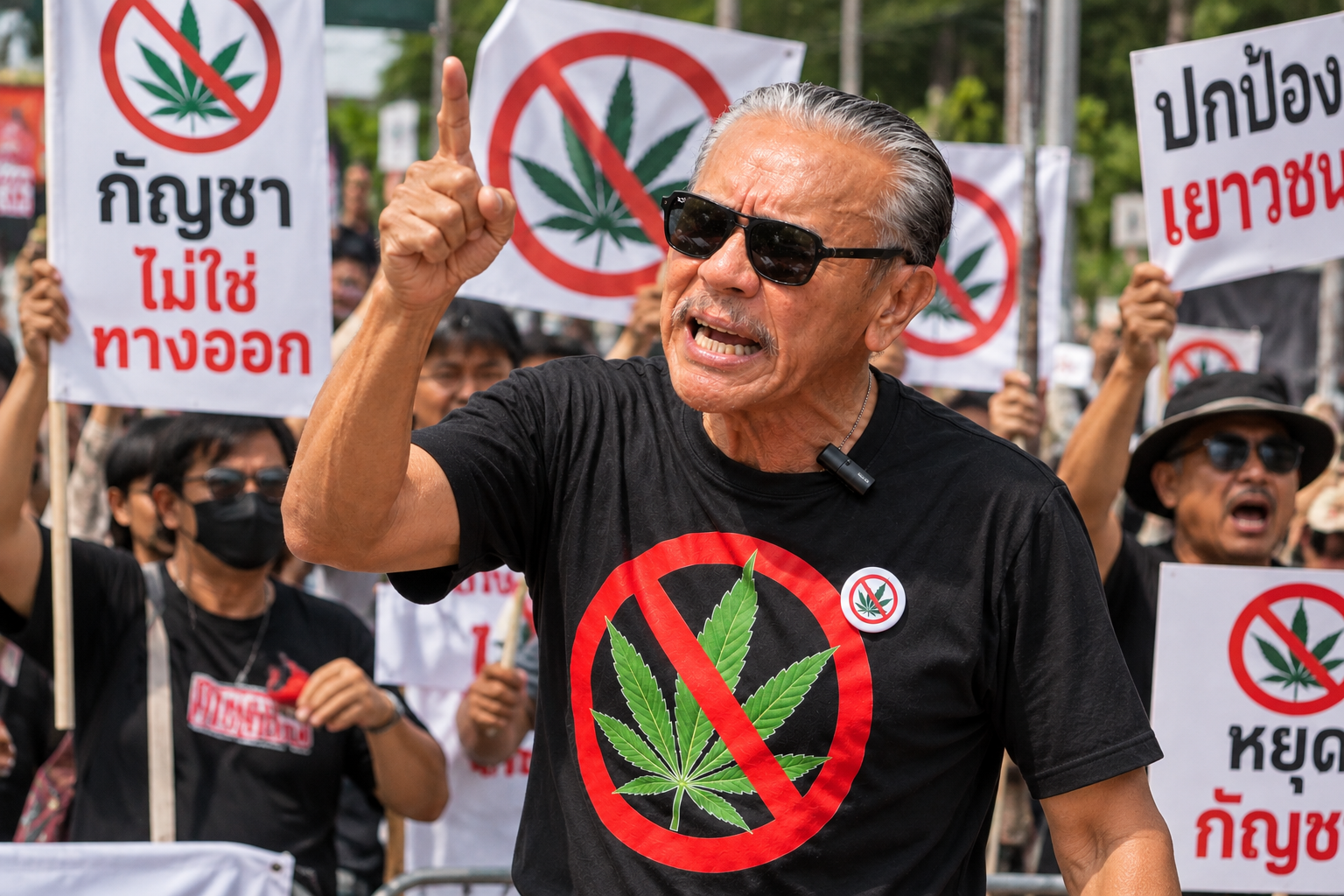
But by early 2023, he had become one of the most vocal opponents of the decriminalisation policy.
His campaign became an increasingly public confrontation with the Bhumjaithai Party. By May, the party had filed a civil lawsuit seeking 100 million baht in damages and attempted to restrict his campaign activities.
The court declined to grant the temporary injunction.
What had begun as an agricultural and medical reform was now an increasingly contentious issue in Thai electoral politics.
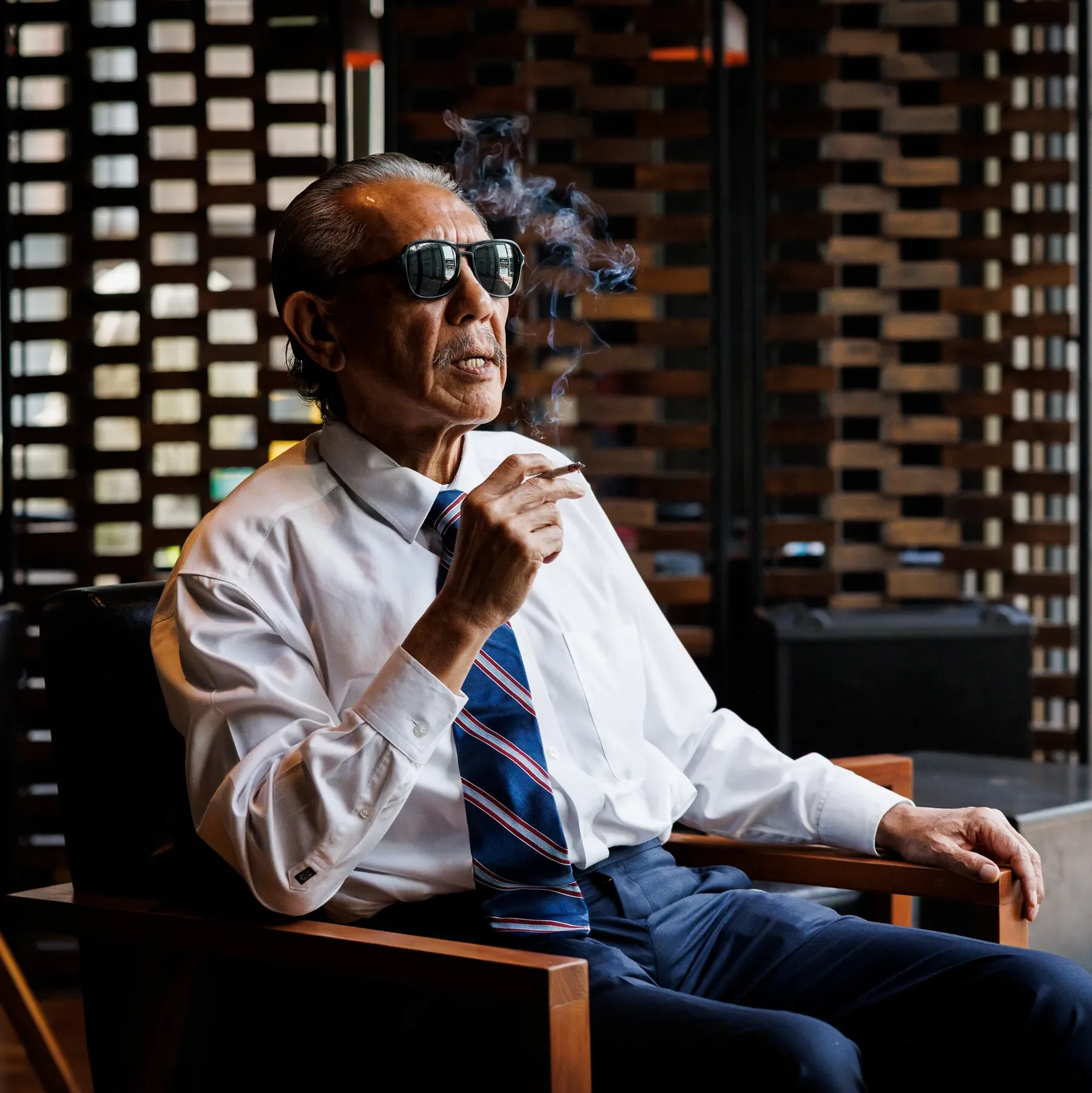
In February, he appeared near Government House accompanied by students and parents. They brought cannabis plants, which were ceremoniously cut down in front of the assembled media. Chuwit accused the government of exposing young people to cannabis without adequate safeguards.
He subsequently turned his attention to dispensaries operating near schools, including one opposite a school in Bangkok's Silom district.
A Dispensary Becomes a Campaign Headquarters
There was, however, a rather delicious irony in Chuwit's crusade. The Davis Hotel in Bangkok's Sukhumvit district, owned by Chuwit’s family, was itself home to a cannabis dispensary. The business, Dispensary 24, was operated by an independent tenant who reportedly paid 100,000 baht a month in rent.
In February 2023, public health inspectors arrived at the hotel to examine the dispensary. Chuwit was furious. Convinced the inspection was politically motivated, he confronted the officials, swept cannabis products from the counter and stamped on them. The episode made headlines.
Then came the transformation. In May, having reclaimed the premises following the expiry of the tenant's six-month lease, Chuwit opened an anti-cannabis campaign centre in the very space previously occupied by the dispensary. Visitors could collect campaign shirts, stickers and badges, or lodge complaints about cannabis-related problems.
Only in Thailand, perhaps, could a cannabis shop become an anti-cannabis headquarters almost overnight, with the landlord leading the charge.
The Public Backlash
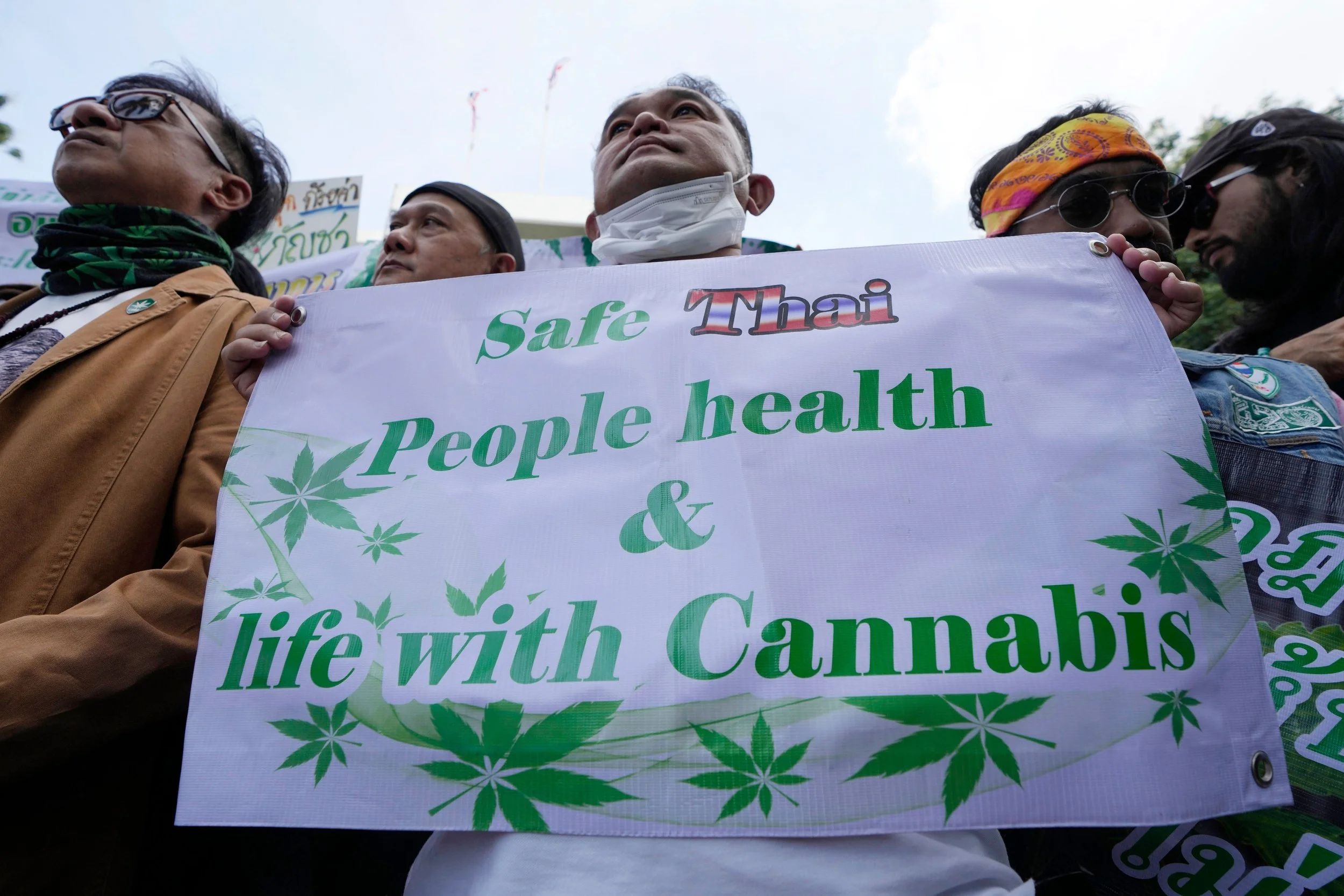
Chuwit Kamolvisit was not alone in opposing the direction of Thailand's cannabis experiment. The rapid spread of dispensaries had prompted concerns about recreational use, particularly among young people. A nationwide survey conducted by the National Institute of Development Administration (NIDA) in May 2024 revealed the extent of the backlash. Of the 1,310 respondents aged 15 and over, 75.65 per cent supported returning cannabis to the narcotics list, either strongly or somewhat. At the same time, 74.58 per cent supported government policies promoting its medical use, while just 3.21 per cent favoured policies encouraging recreational consumption. The survey suggested that substantial support for medical cannabis could coexist with strong opposition to the recreational market that had emerged following decriminalisation.
The Money Already Invested
While politicians argued over cannabis policy, growers, processors and retailers had already committed money to cultivation, supply chains, leases and shop fit-outs. For Tongchai, the debate concerned the future of a business established under a regulatory environment now being reconsidered.
At the time of writing, in September 2026, Thailand's cannabis experiment has entered another uncertain chapter.
In June 2025, the government substantially tightened the rules governing cannabis flower, restricting its sale to medical purposes and requiring customers to obtain prescriptions from authorised practitioners. The days when a tourist could simply walk into a dispensary and purchase cannabis as casually as a packet of cigarettes were, at least in law, over.
Yet cannabis shops remain a familiar feature of the Thai streetscape.
On 22 September 2026, the Cabinet approved a new Cannabis Control Bill, intended to establish a more comprehensive framework for the industry. Among its proposed measures are tighter controls over cultivation and processing and a requirement that existing cannabis retailers convert into medical facilities when renewing their licences.
The bill must still pass through Parliament before becoming law.
For the thousands of businesses established during the cannabis boom, the direction of government policy is becoming clearer. What remains uncertain is how many will be able to adapt to it.
The Cost of Changing Course
The consequences extended well beyond the dispensaries in Thailand's tourist districts. In June 2024, TDRI researchers estimated that only 25 per cent of cannabis businesses were profitable, while acknowledging market uncertainty. Following the 2025 prescription requirements, Channel News Asia reported sales declines of up to 90 per cent at some retailers.
Specialist equipment, unsold stock and money spent fitting out leased premises are not necessarily recoverable. The question for many operators was whether their businesses could survive the transition.
Back to Moon Muang Road
When I last spoke to Tongchai, he was still hoping to keep the business going. He wanted to comply with the new regulations, but he needed to know what that would involve, how much it would cost and whether the business could remain viable.
The answers were far from clear.
Under the proposed medical framework, existing dispensaries would have to convert into medical facilities when renewing their licences, with a doctor on the premises to prescribe cannabis. For a small operator, that could mean substantial additional staffing, licensing and premises costs.
Tongchai had already invested heavily in the shop and bar. Now he faced the prospect of spending more simply to remain in an industry that government policy had encouraged him to enter.
I cannot say what will become of his business. Perhaps he will find a way to adapt. Perhaps the bar will become the principal enterprise. Or perhaps the cost of compliance will prove too great.
I think back to that old teak house in the Chiang Mai laneway, its weathered timber walls, colourful neon signs and little courtyard.
When I first met Tongchai, he was a young entrepreneur looking to make something of a new opportunity. Three years later, he is trying to work out whether he can afford to remain in the business.
The government can change the rules. Tongchai still has to pay the rent.